Public Realm & Green Infrastructure
-
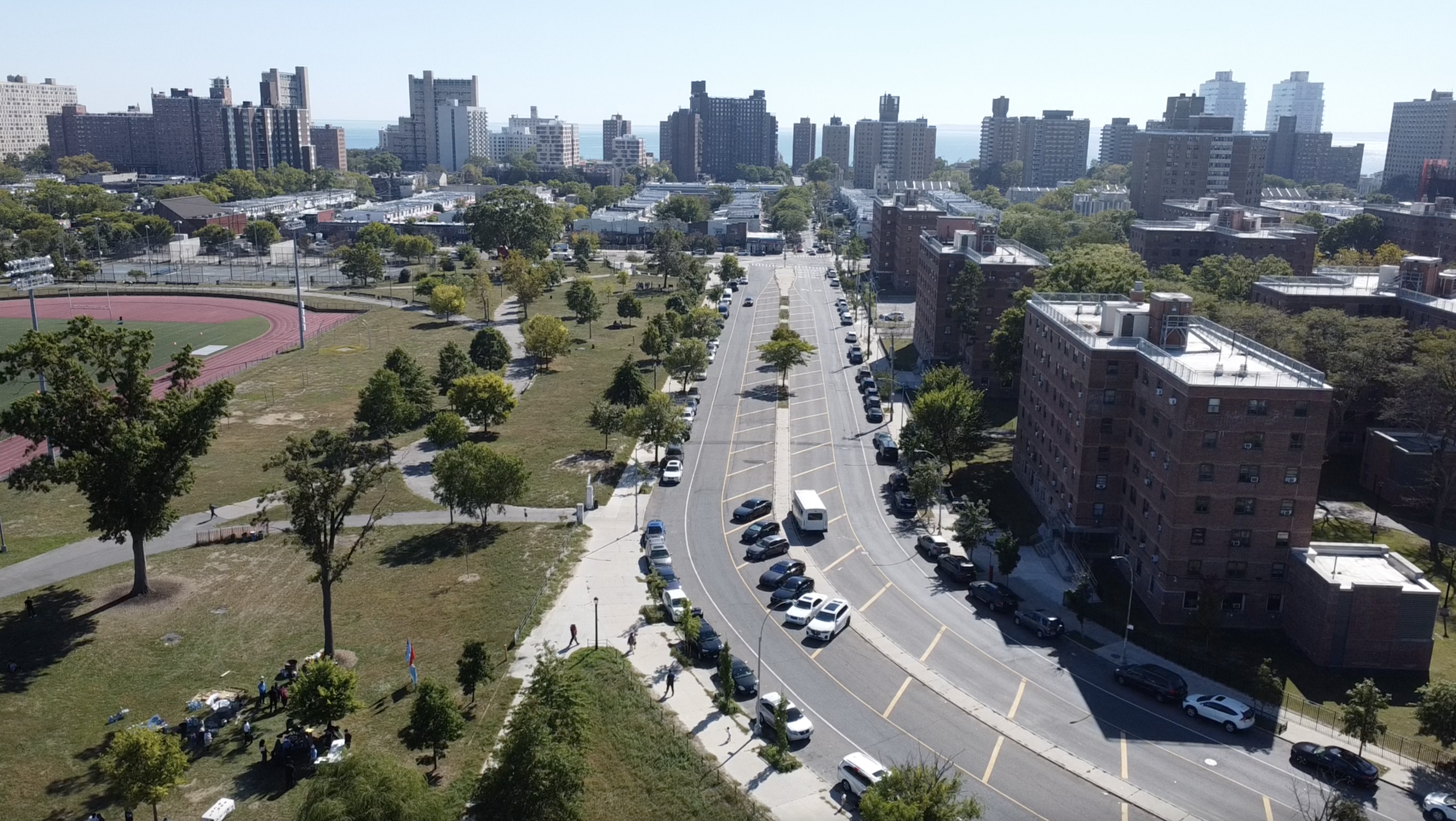
Coney Island’s public realm is anchored by more than 2 miles of shoreline and boardwalk infrastructure, creating one of New York City’s most significant waterfront civic landscapes. Alongside the beach and boardwalk, major open spaces including Asser Levy Park, Kaiser Park, and Coney Island Creek Park — as well as destinations like the Coney Island Amphitheater — form an interconnected outdoor network that supports recreation, cultural programming, tourism, wellness, and everyday community gathering across the peninsula.
-
Community centers throughout Coney Island function as essential social infrastructure for neighborhood residents. Institutions including the Coney Island YMCA, NYCHA-operated community facilities, and culturally rooted organizations such as Apna Brooklyn provide critical support services ranging from workforce development and housing assistance to food distribution, legal advocacy, and programming for seniors, youth, and immigrant communities. Together, these spaces operate as trusted neighborhood anchors that strengthen social connection, resource access, and collective care.
-
The role of community infrastructure became especially visible in the aftermath of Superstorm Sandy, when facilities such as the YMCA and NYCHA community centers transformed into emergency response hubs for food distribution, volunteer coordination, and information sharing. These experiences demonstrated that Coney Island’s civic and community spaces are not only places of recreation and service, but also critical resilience infrastructure capable of supporting residents during moments when formal emergency systems fall short.
Environmental Stewardship & Climate Resilience
-
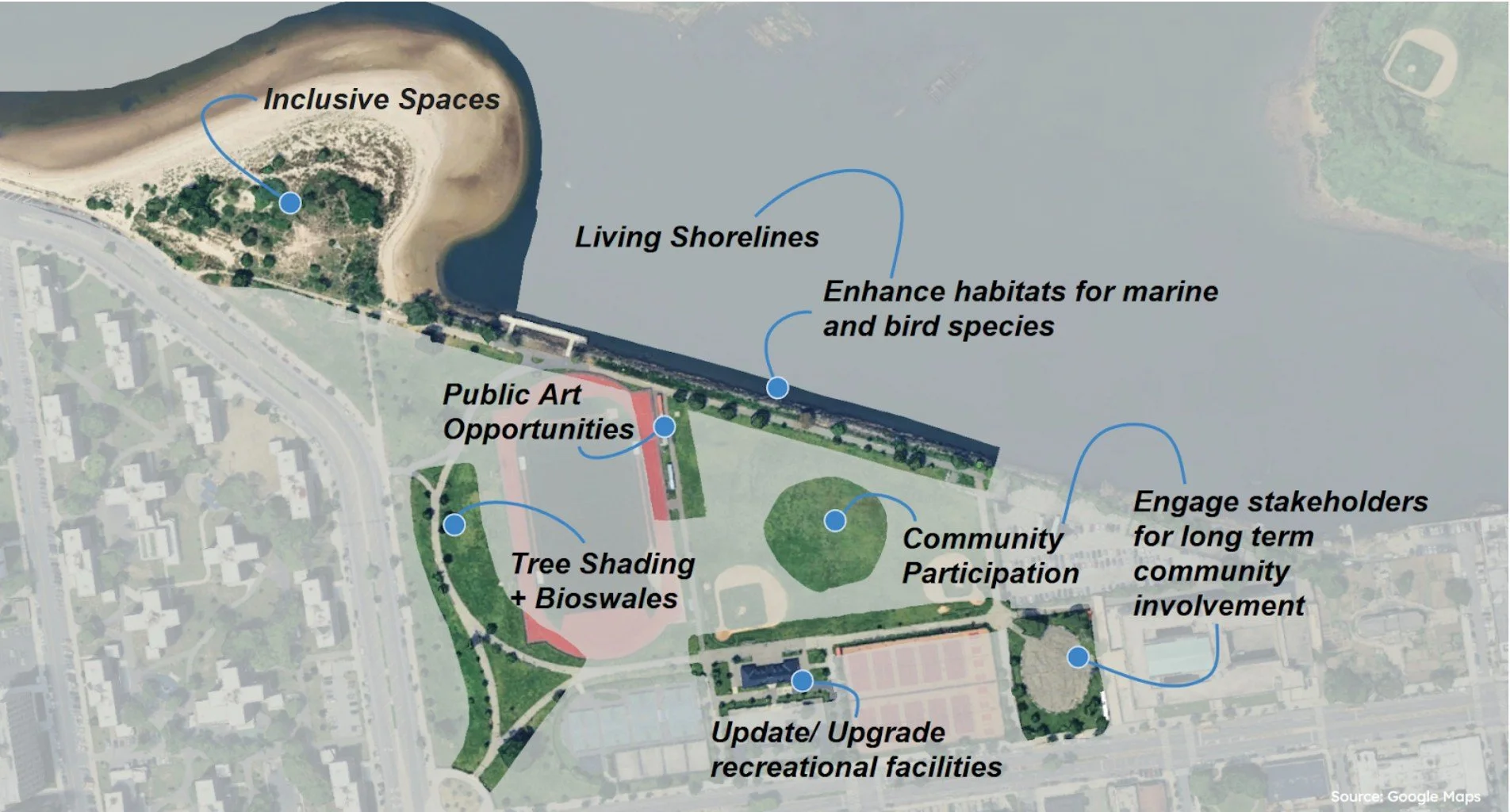
Throughout Coney Island, vacant and underutilized lots represent both a visible condition of disinvestment and a significant opportunity for community-led environmental activation. Existing vacant land across the peninsula — documented through neighborhood mapping and acreage analysis — offers potential sites for green infrastructure, public programming, urban ecology projects, youth engagement, stormwater management, and open space expansion. These spaces present opportunities to reimagine land not as idle property, but as a resource for long-term neighborhood resilience and collective use.
-
Community engagement efforts consistently revealed a strong desire for accessible public gathering spaces that support cultural programming, recreation, education, wellness, and intergenerational connection. Residents identified the need for more activated outdoor spaces where community members can gather year-round through events, performances, markets, workshops, and neighborhood-led initiatives. As public space remains one of Coney Island’s most visible shared assets, community members continue to advocate for investments that prioritize local stewardship, accessibility, and meaningful public use over privatization and exclusion.
-
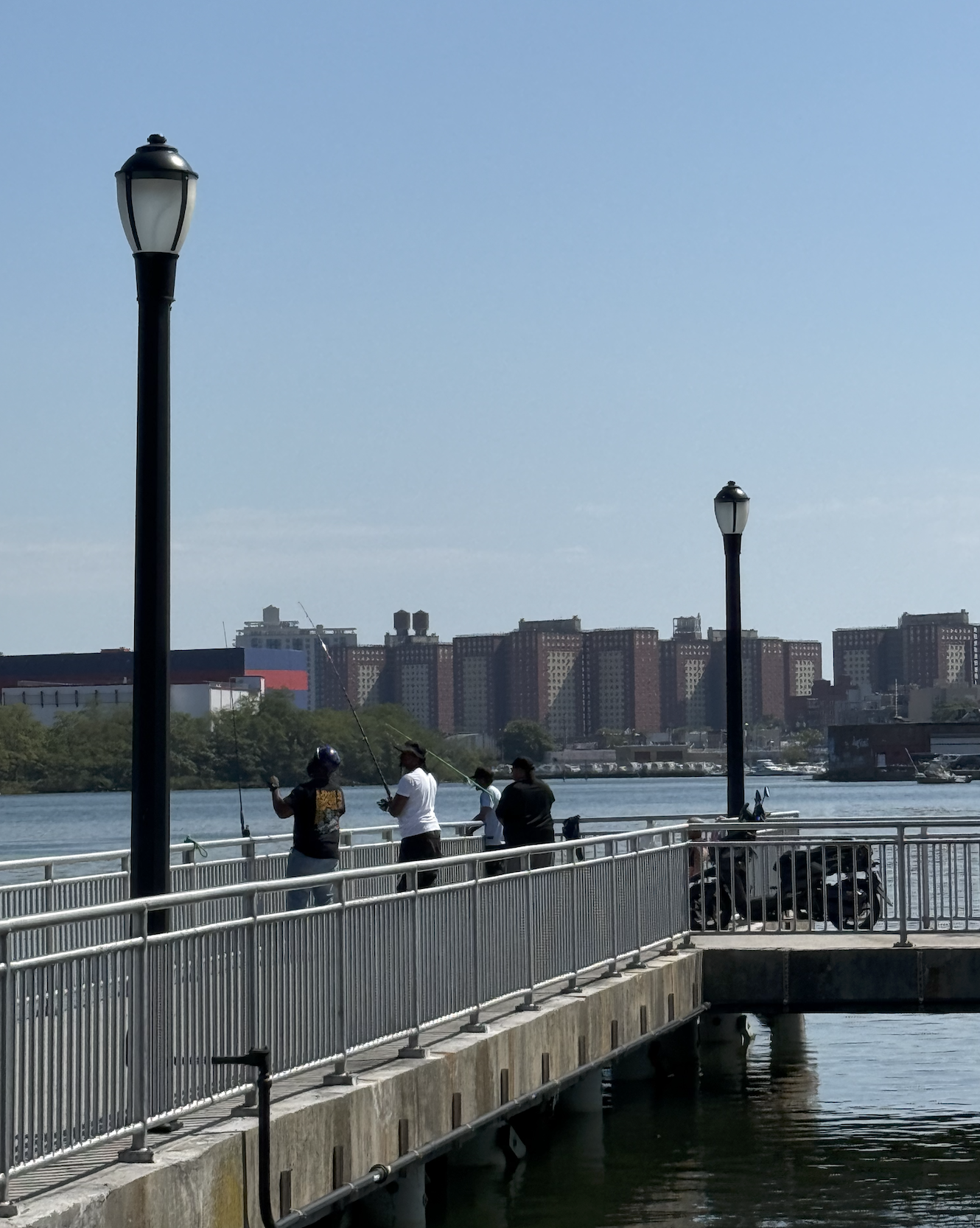
Coney Island Creek remains one of the neighborhood’s most complex environmental and cultural landscapes. Long impacted by industrial dumping, sewer overflow, and environmental degradation, the Creek also holds deep intergenerational significance for residents who have maintained longstanding relationships to its waters through seasonal fishing, observation, recreation, and informal stewardship practices. Community narratives reveal a history of residents monitoring environmental conditions, sharing local ecological knowledge, and advocating for restoration and accountability. Today, the Creek represents both an environmental justice concern and an opportunity to strengthen climate resilience through community-centered ecological restoration and waterfront stewardship.
Mapping Environmental Conditions of Coney Island
-
![]()
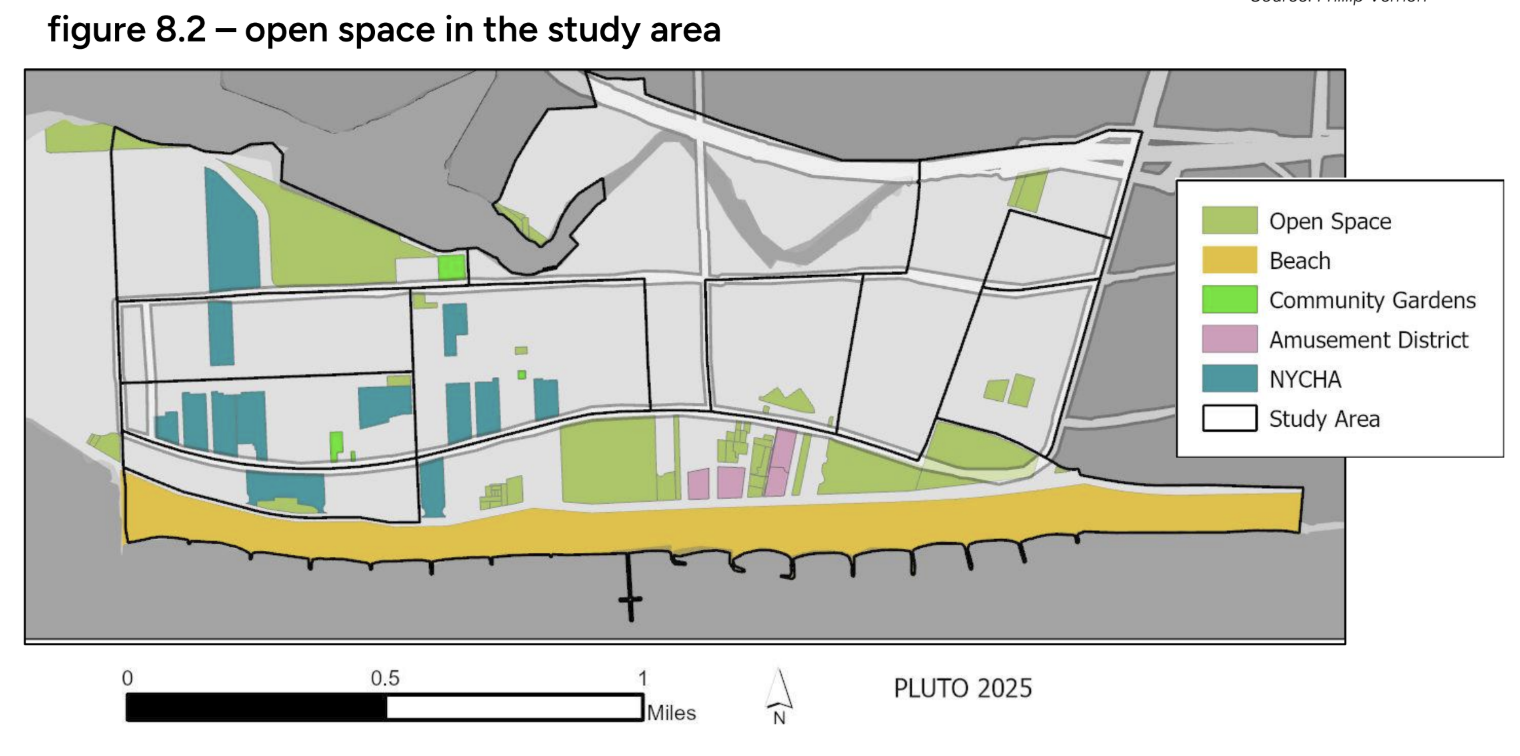
Open Space
The majority of this open space is the 107-acre oceanfront beach and boardwalk park that extends nearly three miles from West 37th Street to Ocean Parkway. Historic Riegelmann Boardwalk serves as both promenade and cultural artery, connecting visitors to the beach, amusement district, and the New York Aquarium.
-
![]()
Pollution & Permeability
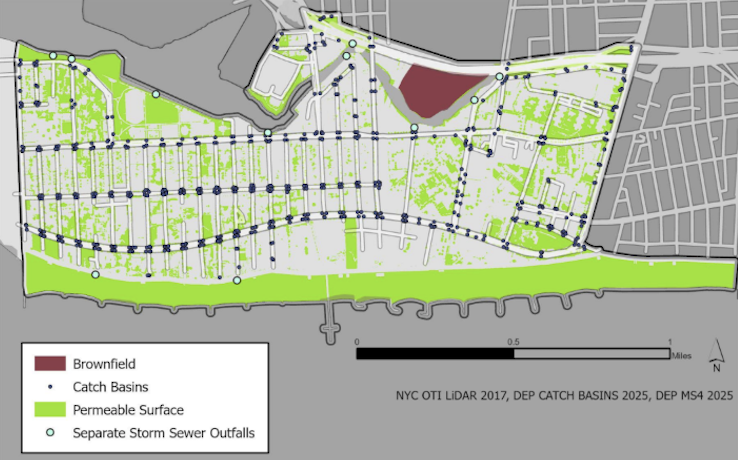
The Coney Island sewershed is the second-largest in Brooklyn, accounting for over 625M sqft of land. While the northernmost portion of the sewershed uses a combined sewer system, including the neighborhoods Canarsie, East Flatbush, and Midwood, the neighborhoods of Coney Island, Sheepshead Bay, and Brighton Beach all have separate sewer systems, meaning that flooding in these neighborhoods does not result in combined sewer overflows (CSOs). The Coney Island sewershed has 4 CSO outfalls, all located on Fresh Creek Basin.
-
![]()
Tree Cover
Image Source: NYC Environment and Health Data Portal 2024
The distribution of trees in the neighborhood contributes to the heat island effect on Coney Island. Trees are mainly concentrated in and around parks, while those throughout the neighborhood have large stretches of sidewalk between them. While walking around the neighborhood we also noticed that many of the trees outside of parks are not large enough to provide shade.
-
![]()
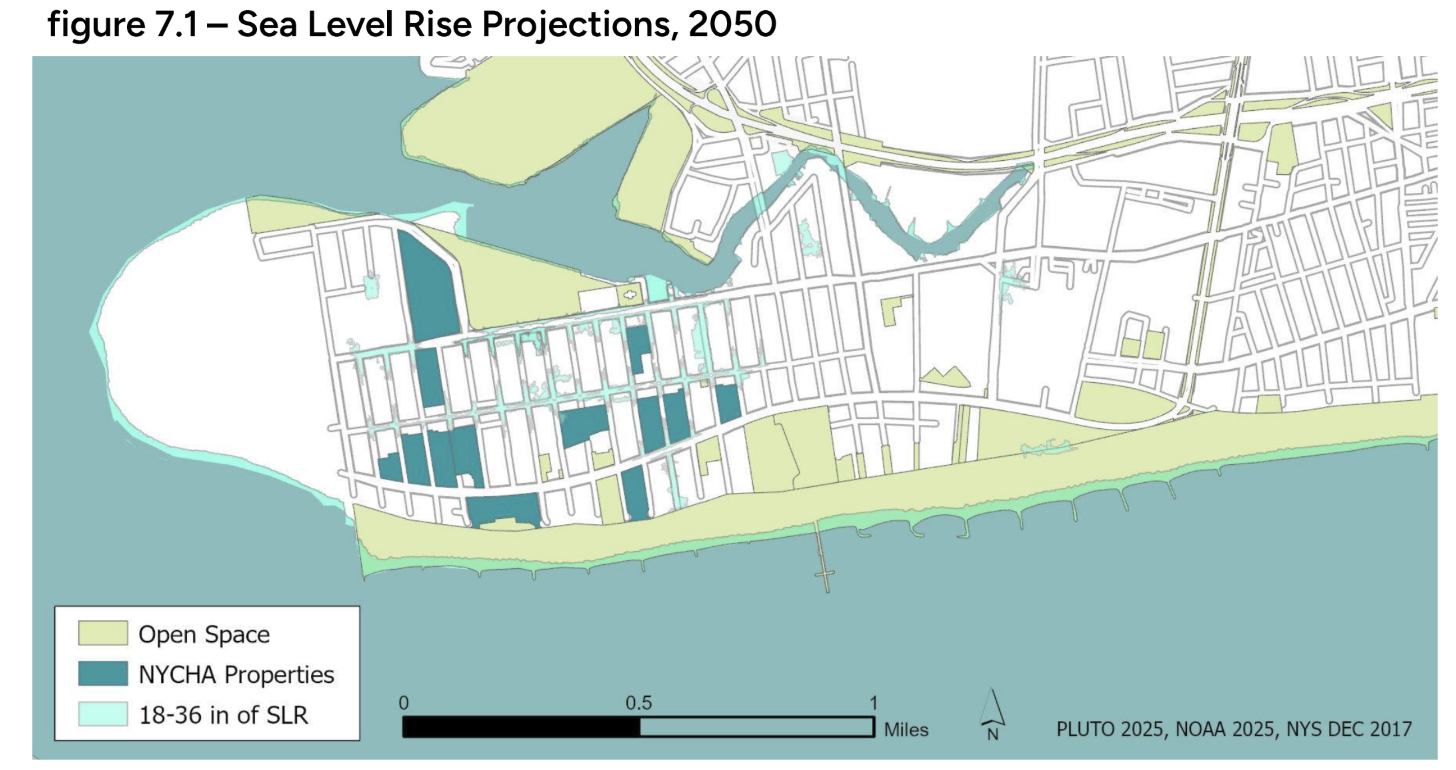
Sea Level Rise Projections (2050)
According to the NYC Panel on Climate Change (NPCC, 2023), sea levels are projected to rise between 18 and 30 inches by the 2050s in a high-end scenario. This would place much of the Coney Island peninsula, particularly areas west of Stillwell Avenue and around Coney Island Creek, at risk of chronic tidal flooding. A total of 66 properties would be impacted, including 17 percent of residences and 12 percent of local businesses There are two non-NYCHA high-density residential buildings within the 7 properties that are projected to be completely inundated.
-
![]()
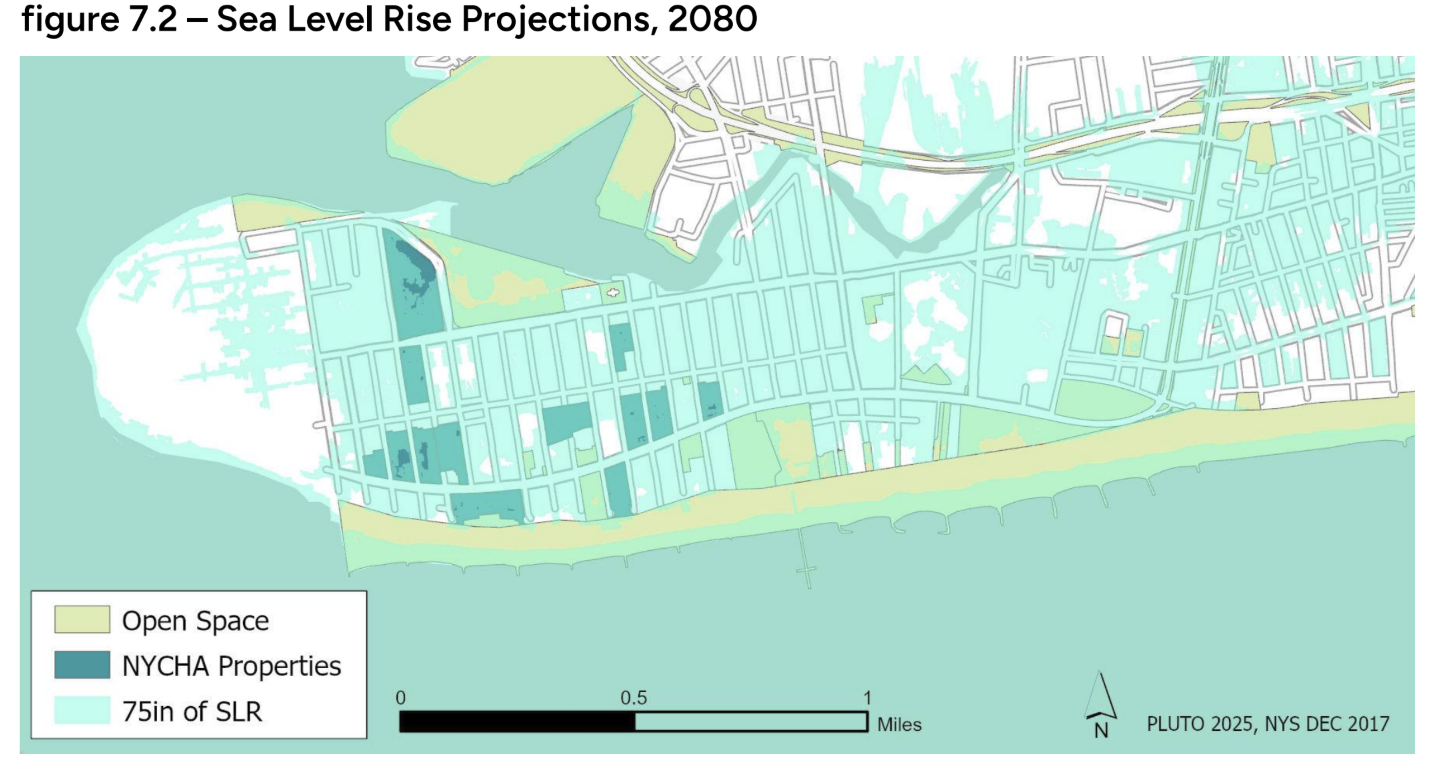
Sea Level Rise Projections (2080)
By 2080, models project up to 4 to 6 feet of sea level rise. This worst-case-scenario projection would completely inundate 89 percent of the study area, which includes over 90 percent of residential properties and 94 percent of businesses that would be fully inundated. This modeling aligns with lived experience, as during Superstorm Sandy in 2012, nearly 10,000 residents were displaced and local businesses suffered significant damage.
-
![]()
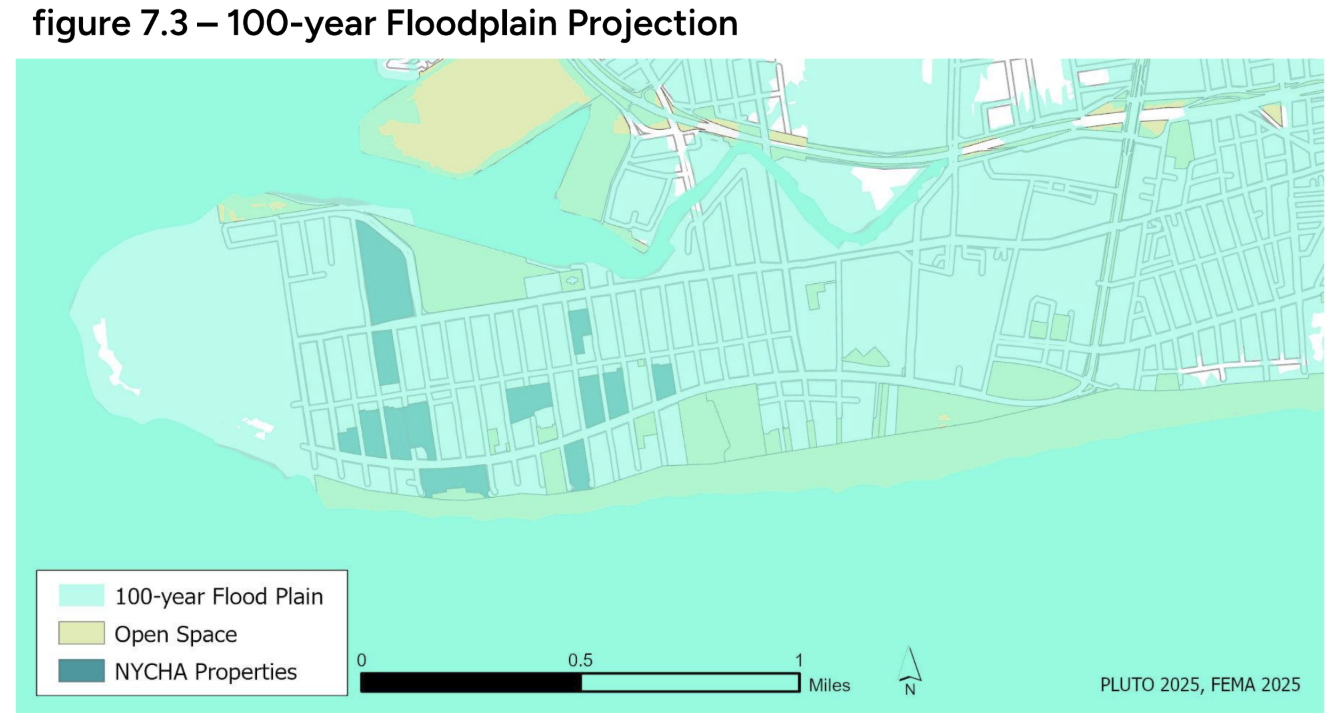
Sea Level Rise Projections (2125)
Nearly the entire peninsula sits within the Federal Emergency Management Agency (FEMA) 100-year floodplain (Fig. 7.3 below), meaning that in any given year, there is at least a one percent chance of a flood event with the potential to inundate streets, homes, and infrastructure. This can also be understood as the likelihood of a catastrophic flooding event in the next 100 years is extraordinarily high. The public housing complexes, such as the Coney Island Houses and Surfside Gardens, are all within FEMA high-risk flood zones.

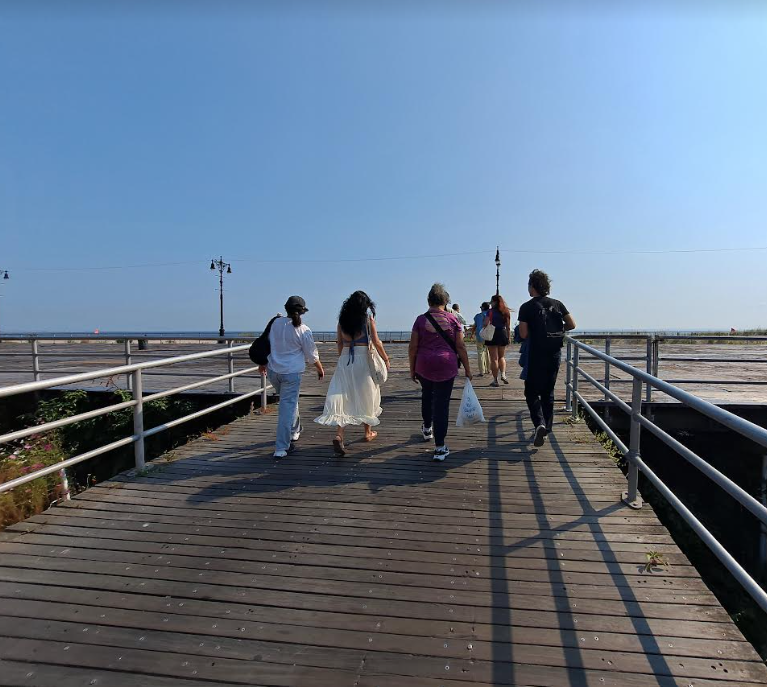
The BoardwalkA stark example of selective city maintenance, particularly the sections where residents access the beach vs. the amusement district, which is currently undergoing restoration after years of neglect.
However, progress has been slow, with deadlines repeatedly pushed back due to shifting priorities and a shortage of skilled professionals needed for the work. This delay has further frustrated residents, who rely on the Boardwalk as a critical connection to both recreational and cultural amenities in the area.



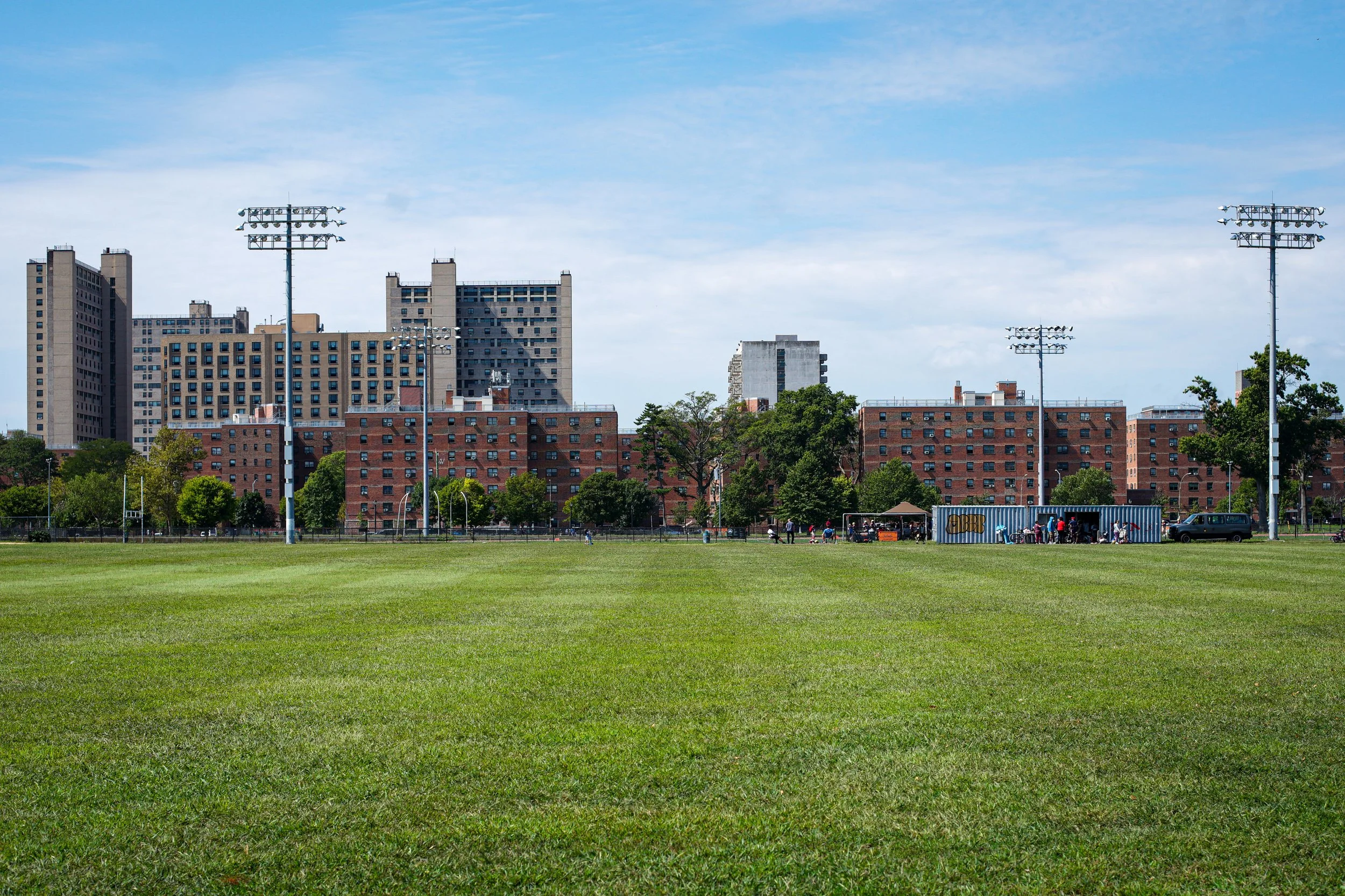
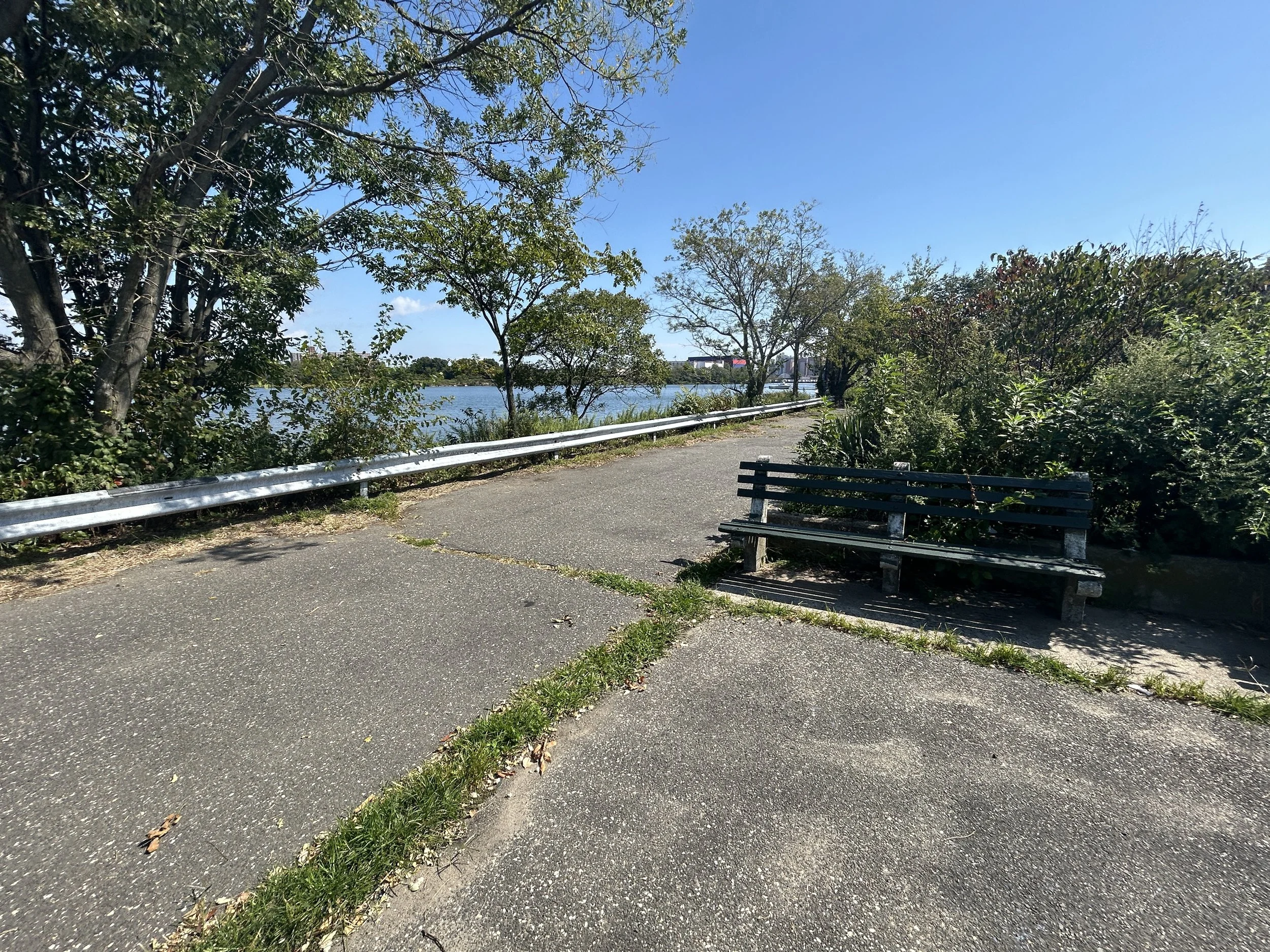
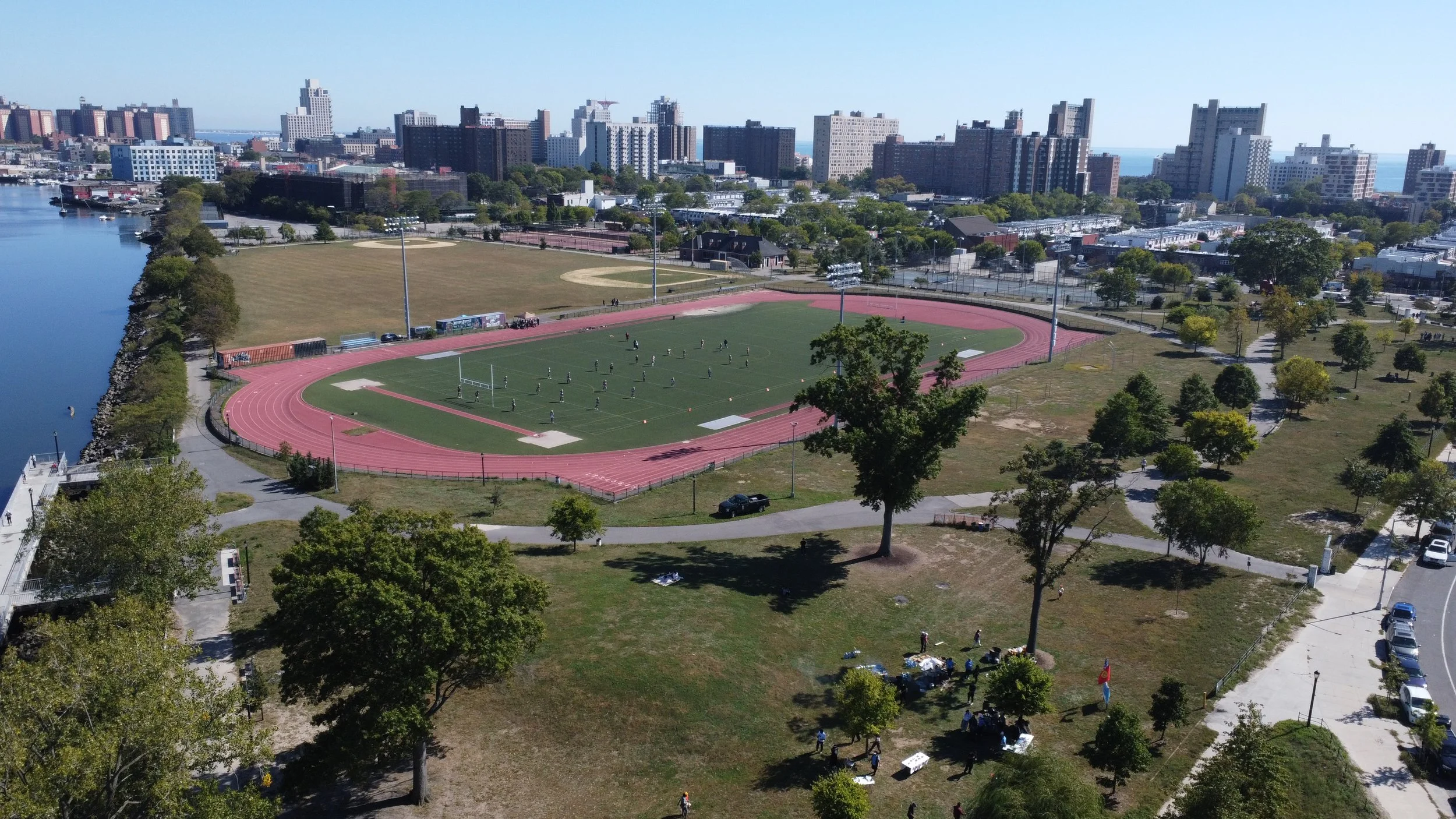
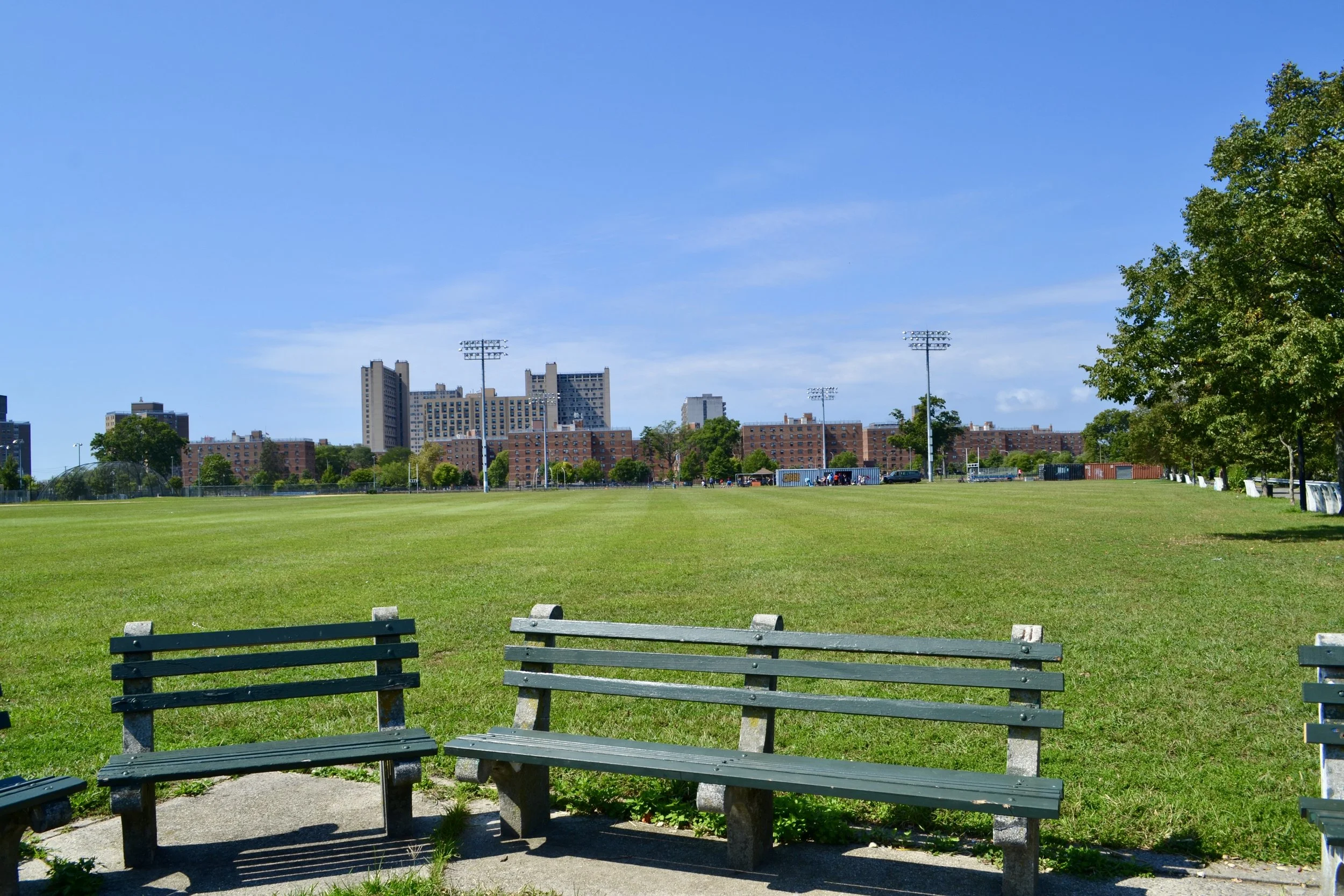
Kaiser ParkOne of the larger and more prominent green spaces in Coney Island, recently received $10 million in funding through Council Member Justin Brannan. This funding represents a significant step toward revitalizing the area, but it also highlights the park's longstanding challenges.
Poor waterfront maintenance has made portions of the park inaccessible and unsafe for subsistence fishing, diminishing its appeal and limiting its potential as a destination for recreation. Additionally, the park suffers from a lack of seating and thoughtful landscaping, which prevents visitors from fully enjoying its vast area and scenic views of the waterfront.
While the funding for Kaiser Park offers hope for positive change, many residents believe there is still a need for broader, neighborhood-wide improvements to green spaces. Thoughtful redesigns that include updated playgrounds, well-maintained walking paths, shaded seating, and spaces for community interaction could transform parks across Coney Island into vibrant, welcoming places. For a community that feels increasingly detached from its open spaces, investing in these improvements is essential to creating parks that are both functional and cherished by residents.
Photo Sources: Phillip Vernon (fall 2025 Studio), Courtney Knapp
Support Long Term Community Resiliency and Intergenerational Bonds through Eco-Education
Across interviews, surveys, workshops, and public engagement activities, residents consistently emphasized the importance of strengthening local stewardship, activating underutilized resources, expanding environmental education, and building neighborhood-based resilience strategies that are rooted in care, accessibility, and intergenerational participation. Together, these themes demonstrate that climate resilience in Coney Island is not only an environmental challenge, but also a civic, cultural, and community development opportunity.
Photo Source: Phillip Vernon (fall 2025 Studio)
-
Residents identified the importance of investing in and activating existing neighborhood assets rather than relying solely on large-scale external development. Community beautification efforts, underutilized public spaces, and neighborhood facilities such as the West End Community Resilience Center were repeatedly highlighted as opportunities for expanded programming, gathering, emergency preparedness, and local stewardship. Participants expressed a desire for spaces that are visibly cared for, community-oriented, and capable of supporting both everyday neighborhood life and long-term resilience planning.
-
Community feedback underscored the need for residents to play a more active role in shaping environmental resiliency initiatives across the peninsula. This includes supporting community-led flood mitigation efforts, expanding local “water watching” practices around shoreline and sewer overflow conditions, and strengthening hyperlocalized urban agriculture and stewardship networks. Residents emphasized that environmental resilience should not be imposed through top-down systems alone, but developed through local knowledge, neighborhood participation, and ongoing community accountability.
-
Residents also emphasized the importance of environmental education as a long-term strategy for strengthening stewardship and resilience across generations. Participants expressed interest in creating more opportunities for K–12 youth engagement, elder-led knowledge sharing, multilingual programming, and multicultural environmental learning initiatives rooted in the lived experiences of the neighborhood. Community members identified education not only as a tool for awareness, but as a way to strengthen intergenerational relationships, cultural continuity, and collective responsibility for the future of Coney Island’s environmental and public spaces.