Coney Island Housing Stats
-
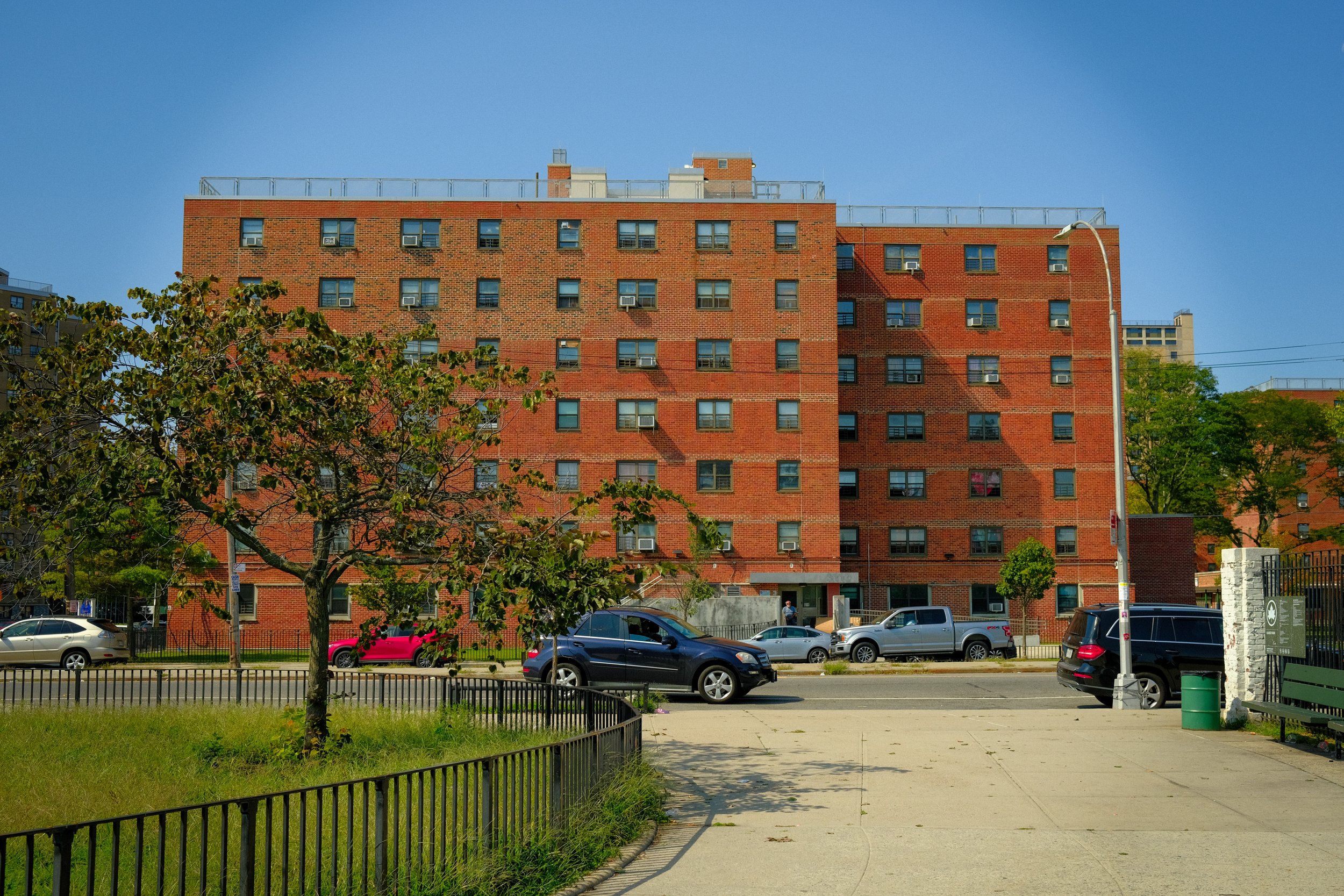
Median Home Value in Coney Island: $432,149; Brooklyn: $865,300
Median Gross Rent in Coney Island: $985; Brooklyn: $1,715; NYC: $1,714
Housing Vacancy in Coney Island: 6.6%; Brooklyn: 7.6%; NYC: 9.3%
-
53% reported that “Housing is not affordable”
61% agreed that Coney Island needs more affordable housing
71% reported that Housing is not well-maintained, comfortable, or safe
71% disagree with development of market-rate/luxury housing (55% strongly disagree)
63% agree that There aren’t programs to help if at risk of losing housing
40% reported that Purchasing a home does not feel attainable
-
Affordable housing (rent and own) (12)
Middle income
Maintenance & Cleanliness (9)
Safety (8)
More police for public housing
Housing Conditions
No new developments (2)
Larger units (lack of 3-br)
More units
Increasing ownership
Luxury apartments with preference for those already living in the area
The People who Live and Work in Coney Island
Population and Households
The 11-census tracts included in the study area is home to 44,752 people. The average age is 47, compared to the average age of 37 in New York City as a whole. 44% of the population is male, and 56% is female.
Race, Ethnicity, and Languages Spoken at Home
The bar chart below displays the population distribution of Coney Island by race and ethnicity. According to the data, 56% of the population identifies as White, making it the largest group in the area. The Latino population comprises 17.5%, while both the Black and Asian/Pacific Islander populations each account for 11.8%. Finally, the "Other" category constitutes a smaller portion at 2.8%. This chart underscores the racial and ethnic diversity present within the Coney Island community.
Coney Island is home to a very diverse population, including a large foreign-born population. There are four major languages spoken in Coney Island, including English, as well as a diverse racial makeup.
Languages Spoken at Home (other than English)
53.3% Russian
15.7 Spanish
10.6% Mandarin/ Cantonese
Spotlight on Housing Affordability:

Median Household Income by Census Tract
33.6% of households have an income of less than $20,000 per year in Coney Island, compared to 16.5% in BK and 16.3% in NYC

Percent of Persons Living Below Poverty Level
Coney Island experiences significantly higher poverty rates compared to surrounding geographies. Approximately 29.5% of residents live below the poverty line, compared to 19% across Brooklyn. Among older adults ages 75–84, 4.4% of Coney Island residents fall below the poverty line, compared to just 0.9% borough-wide. Gender disparities are also evident, with 17.4% of women in Coney Island living in poverty, compared to 9.6% across New York City. These figures highlight persistent inequities and underscore the need for targeted, place-based economic support.
-
![]()
Renters as a Percent of all Households by Census Tract
Coney Island is approximately 73% renter-occupied, compared to 69% in Brooklyn and 67% across New York City, indicating a higher reliance on rental housing than both the borough and the city as a whole.
-
![]()
Rent Burdened Households by Census Tract (Paying 30% or more of income)
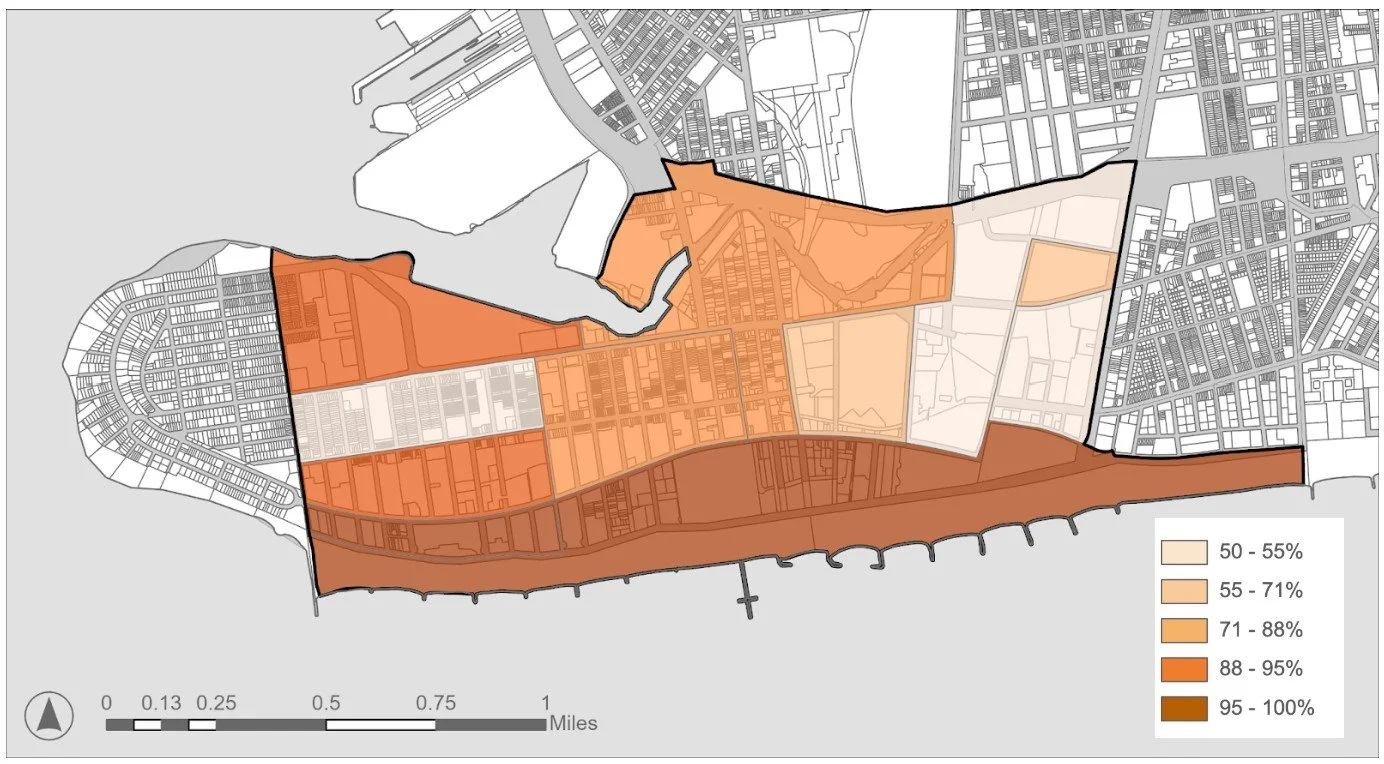
58% of renters are rent burdened (>30%) in Coney Island compared to 49% in Brooklyn and NYC, as illustrated in the map below. Several thousand renting households are severely rent burdened, spending at least half of their total household income on housing related costs.
-
![]()
Total Number of Renting Households Experiencing a Severe Housing Burden (50% or more of income)
A significant share of renting households in Coney Island experience a severe housing burden, spending 50% or more of their income on rent, reflecting ongoing affordability challenges and financial strain among residents.


Health & Wellness in Coney Island
-
![]()
Neighborhood Physical Wellness
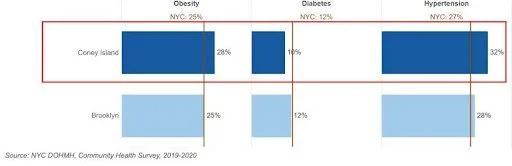
The Coney Island community is faced with three main health concerns: hypertension, diabetes, and obesity. These diseases are a combination of family history, environment and social factors. This means that these diseases could be counteracted or conditions could be significantly improved by a healthy diet, regular exercise, and being aware of sodium consumption.
-
![]()
Educational Wellness
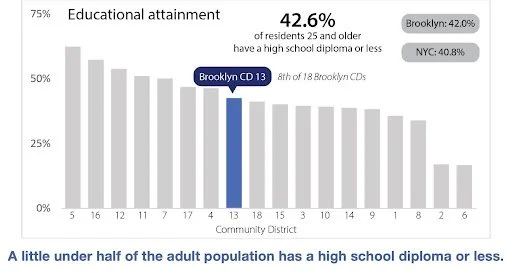
In Coney Island, approximately 42.6% of residents have less than high school diploma attainment, indicating that a significant portion of the population has not completed higher levels of formal education. This reflects broader neighborhood wellness challenges, including limited access to educational resources, workforce pathways, and long-term economic mobility opportunities.
-
![]()
Coney Islanders under 26
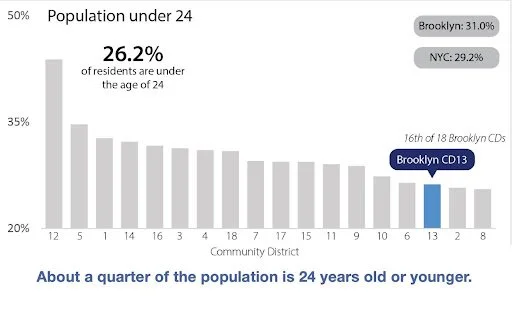
Approximately 26.2% of Coney Island residents are under the age of 24, indicating a relatively young population with significant needs for youth-focused services, education pathways, and workforce development opportunities.
-
![]()
Childhood Obesity
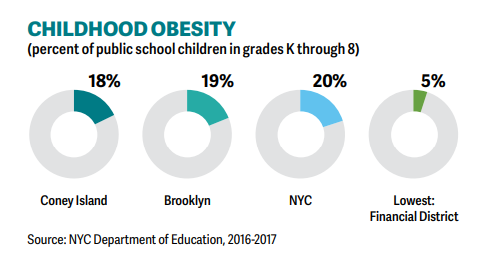
According to NYC Department of Education 2016–2017 K–8 fitness data, childhood obesity rates are 18% in Coney Island, compared to 19% in Brooklyn and 20% across New York City. While Coney Island’s rate is slightly lower than borough and citywide averages, the figures still point to broader neighborhood wellness challenges that shape children’s long-term health outcomes.
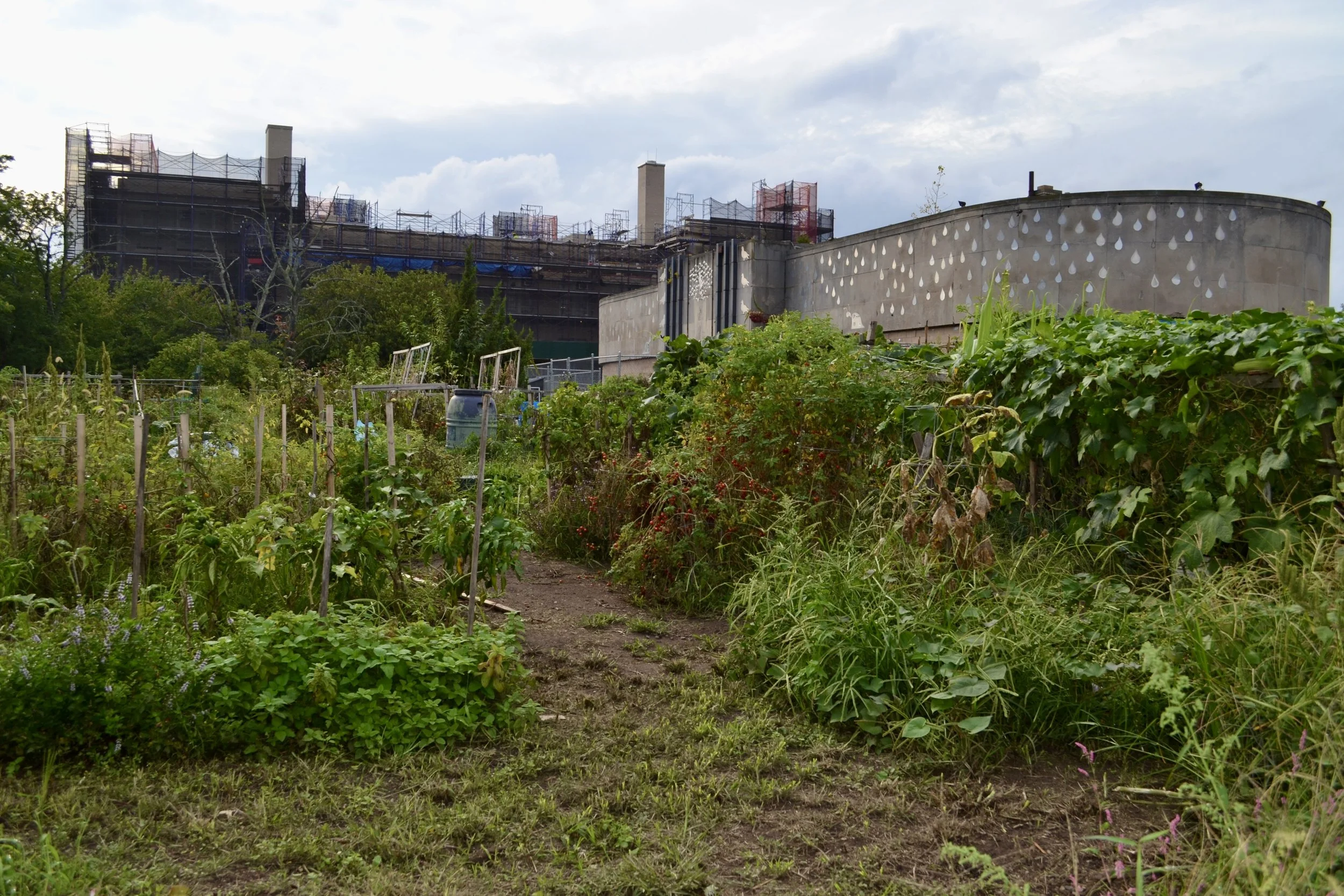
Expand Neighborhood Environmental Assets
This objective emphasizes the connection between environmental assets and housing stability. Enhancing green infrastructure around residential areas can improve livability, support mental and physical health, and contribute to neighborhood value without displacement. Partnerships between residents, local organizations, and public agencies will be essential to planning, implementing, and sustaining these improvements over time.
Efforts should prioritize underserved blocks with high population density, limited open space, and elevated vulnerability to heat, flooding, and pollution. Integrating community-led stewardship models will help ensure these spaces are maintained, culturally relevant, and responsive to local needs.
-
Hydroponic farming systems provide year-round opportunities for fresh, locally grown produce while using significantly less land and water than traditional agriculture. When paired with existing community gardens, these systems expand growing capacity and create opportunities for hands-on learning, workforce training, and local food distribution. This strengthens access to healthy food while building skills in sustainable agriculture and urban farming technologies.
Solar rooftop activation enhances this system by providing clean energy to support growing operations, reduce utility costs, and increase the self-sufficiency of community facilities. Installing solar infrastructure on public buildings, garden sheds, and partner sites allows environmental initiatives to operate more sustainably while modeling climate-resilient design practices at the neighborhood scale.
-
Rooted in collaboration between NYCHA residents, community garden networks, and private gardeners, the program creates a unified stewardship model that bridges public, shared, and private growing spaces. Participants engage in seasonal training cycles focused on planting, harvesting, seed preservation, and soil health, with an emphasis on culturally relevant crops and sustainable growing practices. Elders serve as knowledge holders while youth and emerging growers contribute new skills and energy, creating a continuous exchange of expertise.
By embedding training within existing community gardens and residential landscapes, the program expands access to growing spaces while strengthening local capacity for food production. It also supports the development of shared protocols for cultivation, distribution, and land care, ensuring that stewardship is community-owned rather than externally managed. This structure reinforces collective responsibility and long-term sustainability.
-
The program addresses issues such as illegal dumping, shoreline degradation, and unregulated development impacts by equipping residents with the tools to observe, document, and respond to environmental threats in their local ecosystem.
Grounded in a community-led approach, the program brings together youth, elders, NYCHA residents, and local stakeholders to serve as active stewards of the shoreline. Participants receive training in coastal ecology, reporting procedures, environmental health, and civic advocacy, with a focus on building consistent “eyes on the water” to deter harmful activity and strengthen accountability. This intergenerational structure ensures that knowledge of place, history, and environmental change is shared and sustained over time.
The program also establishes clear pathways for collaboration with local agencies and community organizations to report illegal dumping and environmental violations. Through structured observation routes, community patrols, and digital documentation tools, residents can track changes along the shoreline and advocate for timely responses. This creates a system of collective oversight that strengthens both environmental protection and community empowerment.