Transportation & Mobility Access in Coney Island
-
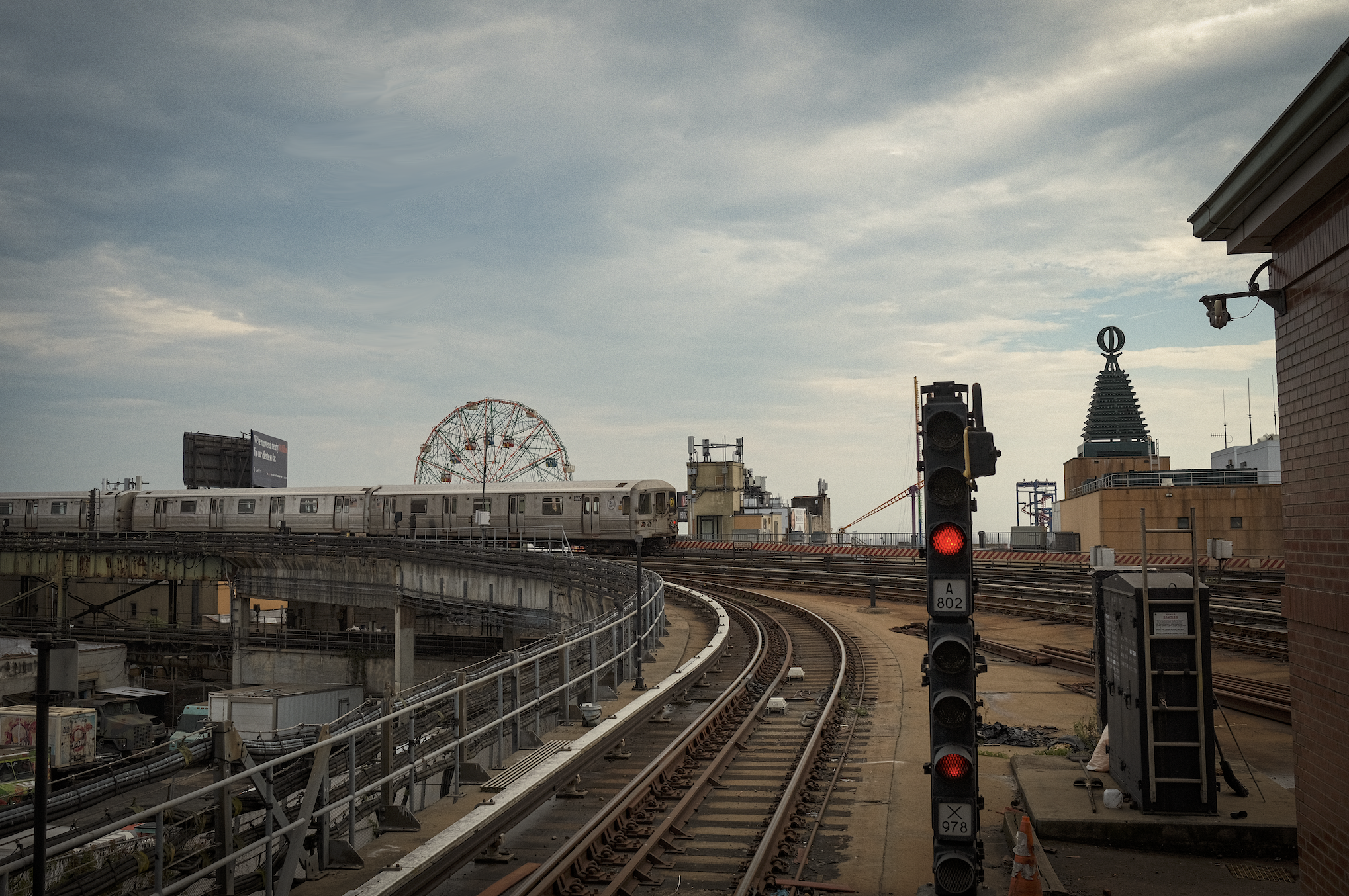
Although Coney Island is served by four subway lines through one of North America’s largest elevated transit terminals, many residents continue to experience significant mobility barriers and lengthy daily commutes. Approximately 96% of residents work outside the neighborhood, with average commute times reaching nearly 50 minutes — exceeding both Brooklyn and citywide averages.
Limited east-west transit connectivity across southern Brooklyn, combined with inadequate local transportation infrastructure, reinforces the peninsula’s physical and economic isolation. Despite the neighborhood’s high level of transit dependency, only 28 of 90 bus stops currently include shelters, ferry access remains unavailable, and the neighborhood contains just 1.9 miles of bike lanes, revealing a significant mismatch between transportation need and public infrastructure investment.
-
Transportation safety remains a critical concern throughout Coney Island, particularly for pedestrians and cyclists navigating heavily trafficked corridors. Between 2016 and 2018, key neighborhood streets recorded 197 pedestrian injuries and 76 cyclist injuries, contributing to pedestrian and cyclist injury rates of approximately 96–97 injuries per 100,000 residents — among the highest rates in Brooklyn. Community feedback consistently identified dangerous intersections, speeding vehicles, limited bike infrastructure, poor lighting, and unsafe street crossings as barriers to safe and accessible mobility throughout the neighborhood.
-
Coney Island is functioning like a “transit desert” where reliance on public transportation is high but mobility systems remain inconsistent, overcrowded, and inaccessible for many users. Because car ownership rates in the neighborhood remain below city averages, residents disproportionately depend on public transit to access employment, healthcare, education, and essential services across the city.
Persistent bus delays, seasonal overcrowding at the Stillwell Avenue station, uneven sidewalks, long crossing times, and inadequate accessibility infrastructure continue to create daily challenges — particularly for seniors, people with disabilities, caregivers, and residents with limited mobility. Community members emphasized the need for transportation investments that prioritize safety, accessibility, reliability, and dignity for everyday riders.
Commuting Characteristics
-
![]()
Public transit serves the East side of the neighborhood far better than the West side
Image Source: NYC Department of Transportation
Coney Island is home to four subway stations, with service from the D, F, N and Q trains as well as five bus routes. Two of these bus routes, the B36 and B74, travel through the neighborhood, rather than just to the neighborhood. Of the 90 bus stops, only 28 have shelter. There are a total of 1.9 miles of bake lanes, on Neptune and Cropsey Avenues, and no ferry service.
-
![]()
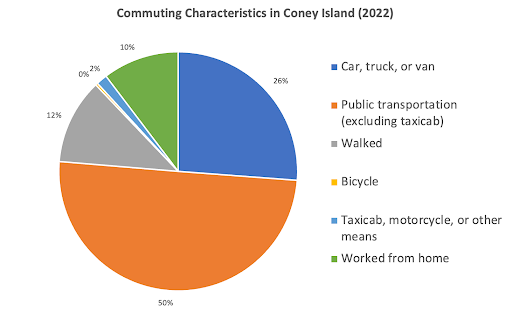
96% of Coney Island residents work outside of Coney Island
Figure Source: American Community Survey
With an average commute time of 50 minutes. The most common transportation mode for commuting to work is public transportation, which makes up 50% of the working population. The second most common is 26% who commute by car, followed by 12% who walk.
-
![]()
Many residents rely on cars for daily tasks
Figure Source: American Community Survey
Our research showed that 41% of households in Coney Island have access to a vehicle. Many of these households who rely on cars frequently experience high traffic congestion, especially during tourist season.
-
![]()
Pedestrian and cyclist safety remains a critical concern
Figure Source:: NYPD
Chronic traffic congestion, deteriorating sidewalk conditions, and a lack of protected bicycle infrastructure create unsafe conditions for those navigating the neighborhood without a car. These challenges disproportionately impact residents who rely on walking, cycling, and public transit as their primary modes of mobility.
-
![]()
Traffic congestion is a major concern
Figure Source: NYS Department of Transportation
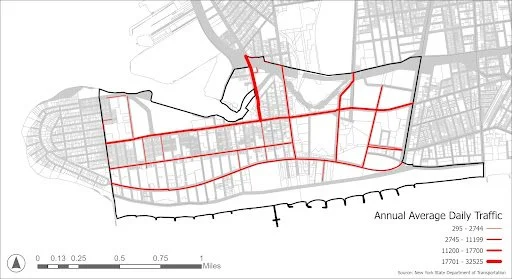
The peninsula experiences a bottleneck of traffic, especially during tourist season. One of the main thoroughfares to enter the neighborhood, Cropsey Avenue, experiences an average of 32,525 vehicles per day, equivalent to the average daily traffic count on Tillary Street crossing Flatbush Avenue in Downtown Brooklyn. Given that this is an average count, the daily count during tourist season is likely higher. The map below displays annual average daily traffic including the 32,525 on Cropsey Avenue as well as 17,700 at Stillwell and Neptune.



Cultivate More Connected and Accessible Neighborhood Mobility Systems for Year-Round Residents.
Community engagement findings revealed that existing transit infrastructure often struggles to meet the daily needs of residents — particularly during peak tourism seasons when congestion, overcrowding, and traffic safety concerns intensify. Across interviews, surveys, and public workshops, residents emphasized the importance of strengthening hyperlocal transportation networks, improving multimodal access, and investing in mobility solutions that support both neighborhood quality of life and long-term community resilience.
-
Residents consistently identified seasonal tourism and event-related congestion as major contributors to transportation stress and public safety concerns throughout the neighborhood. Increased vehicle traffic during peak summer months often creates overcrowded intersections, dangerous pedestrian conditions, limited parking access, and delays for residents navigating everyday travel needs.
Community feedback highlighted the need for stronger traffic calming measures, pedestrian safety improvements, and expanded neighborhood wayfinding systems to improve navigation, accessibility, and safety for both residents and visitors.
-
Community members expressed the need for more flexible and accessible neighborhood transportation options that extend beyond existing subway and bus infrastructure. Recommendations included expanding bike access, strengthening pedestrian connectivity, and increasing access to localized ride-share and alternative mobility services that can better support seniors, workers, youth, and residents with limited mobility.
Across community engagements, participants emphasized that transportation investments should prioritize affordability, accessibility, and ease of movement within the neighborhood, not solely connectivity to destinations outside of Coney Island.
-
Residents also identified opportunities to strengthen hyperlocal transportation systems that improve neighborhood circulation and reduce dependence on overcrowded regional transit infrastructure.
Studio recommendations include the development of micro-transit hubs and localized mobility networks that could integrate bike infrastructure, shuttle access, pedestrian improvements, and community-centered transit connections. These strategies were viewed as opportunities to improve daily mobility, strengthen access to neighborhood resources, and support more resilient and connected transportation systems across the peninsula.